
Category Archives: Quartz

No, One Billion People Do Not Watch the Oscars

one billion oscars

Every year at the Oscars, someone notes that the ceremony is being watched by “a billion people.” That’s an impressive figure, to be sure. It’s also a complete fiction. As I explained at Quartz,

Last year’s Oscar ceremony drew a United States audience of 40.3 million, making it the seventh highest-rated telecast of 2013 (the other top 10 shows were all NFL-related). That would mean that elsewhere in the world—the Academy says Sunday’s telecast will be seen in “more than 225 countries”—an additional 960 million people are interested enough to tune in and see what gown Cate Blanchett will wear and which film will win best production design. Roughly 13% of Americans watched last year’s ceremony; 14% of the remaining global population would also need to view the show in order to reach that mythical billion-viewer figure. Comparatively, the 2008 Summer Olympics opening ceremonies in Beijing were viewed by an estimated billion people, but those numbers were bolstered by more than half of China’s 1.3 billion population.

I trace the origin of the “billion audience” myth, and talk about why, despite all rational evidence to the contrary, the b-word won’t be going away anytime soon.

No, one billion people do not watch the Oscars

One of the Most Buzzed-About Super Bowl Ads Wasn’t Actually an Ad

one of the most buzzed about

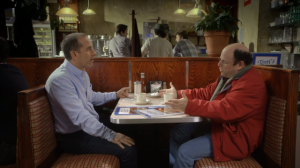
Yesterday, everyone was talking about the Seinfeld reunion that aired during the Super Bowl. As I wrote at Quartz,

While social media immediately began buzzing about the spot, which Seinfeld put together with the help of Seinfeld co-creator Larry David, it wasn’t actually a Super Bowl ad. Neither Seinfeld nor Sony, which owns Crackle, paid FOX any money for the segment, according to The New York Times. Instead, FOX reached out to Seinfeld and asked him to put together a feature segment to help the network kick off its halftime coverage.

A longer version of the reunion ran as part of Comedians in Cars Getting Coffee, Jerry Seinfeld’s web series for Crackle.

One of the most buzzed-about Super Bowl ads wasn’t actually an ad

Why You’ll Never See Philip Seymour Hoffman’s Greatest Performance Yet

U.S. actor Hoffman attends a news conference at the 56th Berlinale International Film Festival in Berlin

I’m still reeling from the news that Philip Seymour Hoffman was found dead yesterday from an apparent drug overdose. As I wrote at Quartz, what might have been his best performance yet was still to come: in an upcoming Showtime comedy series, Happyish.

Last month, Showtime treated reporters at the Television Critics Association’s winter press tour to footage from Happyish, which the network had just officially picked up to series. In the clips screened from the pilot episode, reporters and critics were laughing at the exploits of Hoffman, who played a bitter creative director at a New York City ad agency dealing with a new boss half his age. The footage promised yet another classic Hoffman performance, with a profane rant against social media and an uproarious hallucination involving a Keebler Elf. And even though only the pilot episode had been shot, with a likely series debut set for summer, many in the room—myself included—were already predicting that Hoffman would be making room on his mantle for Emmys, Golden Globes and SAG Awards for his Happyish role.

Those of us lucky enough to see that footage at TCA will always wonder what might have been. RIP, Philip Seymour Hoffman.

Why you’ll never see Philip Seymour Hoffman’s greatest performance yet

Six Ways TV is Changing Forever

six-ways-tv

TCA winter tour is finally winding down, but I wanted to write one last story about the various developments and announcements that I hadn’t been able to address in standalone stories. So for my final Quartz story from TCA, I noted six ways that TV is changing forever, including my observation that pilot season isn’t dead — yet:

Last week, FOX announced the death of pilot season, with Reilly explaining that “it’s highly inefficient” and “built for a different era” when CBS, ABC and NBC were the only three networks in existence. Instead, Reilly has already picked up several projects “straight to series” for next season, bypassing the usual pilot process so as not to waste resources on projects that will never make it to air.

Yet the other networks were quick to declare that while the business is indeed changing, pilot season is still very useful for them. “It’s frustrating, but also exciting,” said CBS’s Tassler, who noted that pilot season’s “compression of time”—in which pilots are cast, shot and focus-tested in a matter of weeks—gives way to “this creative adrenaline” that has delivered their biggest hits, like The Big Bang Theory. NBC’s Greenblatt noted that his network’s new hit The Blacklist “probably would never have seen the air had we not made a pilot, because it came from a relatively young, inexperienced writer. We weren’t exactly sure immediately from that script that we should order a series.”

Farewell, Pasadena!

Six ways TV is changing forever

This Show Just Lowered the Median Age of USA Network Viewers by 12 Years

this show just lowered

One of the interesting challenges of TCA winter tour has been searching for nuggets of news that would be most appealing to Quartz readers. I was at it again today with this story out of USA’s presentation, on how Modern Family has lowered the median age of its viewers by 12 years. As I wrote,

Those early statistics are encouraging for USA, which paid a reported $1.4 million per episode for the syndication rights to the show’s first four seasons, and launched the syndication run in September with a lavish marketing campaign usually reserved for original series. “When we brought Modern Family on, the whole idea was, how do we increase the reach of USA and bring new people into the fold?” USA Network President Chris McCumber told Quartz. “It’s already doing that and it’s only been on the air for a few months.”

McCumber also talked with me about trying to use Modern Family’s success to help launch its upcoming comedies, like Sirens.

This show just lowered the median age of USA Network viewers by 12 years

Soon You Can (Legally) Stream ‘The Simpsons’—but There’s a Catch

soon you can stream the simpsons

Woo hoo! At TCA winter press tour, FX Networks announced that it will create a Simpsons app within its FXNOW streaming app that will finally allow fans to stream all 530 episodes of The Simpsons. FX Networks CEO John Landgraf shared more details with me for this Quartz article:

The Simpsons content will be curated in a separate app, which Landgraf said will be “integrated with and linked through” the FXNOW app. The Simpsons app will contain a multitude of Simpsons clips as well as full episodes (all 530 episodes will be available at all times, not cycled through at various intervals), all of which will “be infinitely cross-referenced and sortable and searchable in various different ways,” Landgraf said.

Landgraf also detailed the app’s big catch, which involves authenticated subscribers, and also talks about FXX’s continued search for its own identity apart from sibling FX.

Soon you can (legally) stream the Simpsons—but there’s a catch

This Time, ’24’s’ Jack Bauer Only Needs 12 Hours to Save the World

this time 24 jack bauer

Four years after the clock ran out on 24, Jack Bauer is back! Kiefer Sutherland’s former CTU agent will return to Fox May 5 in 24: Live Another Day, a 12-episode limited series. At TCA winter press tour, the cast and producers talked about the show, which I wrote about for Quartz.

Yet despite Bauer’s significant backstory, “you can pick this series up without having seen season 8, or the show at all,” said executive producer Manny Coto. That said, it’s not just you: Not even the producers can keep track of all the show’s various twists and turns over the years. “Sometimes we have to check Wikipedia” to see if the characters are still alive, says Coto.

I also spoke with executive producer Howard Gordon about why the show, which has faked previous locations like New York City and Washington, felt it was essential to film on location in London.

This time, 24’s Jack Bauer only needs 12 hours to save the world

Mexican Wrestling is Coming to American TV

mexican wrestling

I certainly didn’t expect to be writing about lucha libre wrestling at press tour, but I was inspired by a panel for Robert Rodriguez’s just-launched El Rey Network, about bring lucha libre to the U.S. with a new league and a new series. As I wrote,

If things go as Burnett hopes, he can tap into the US’s billion-dollar wrestling industry—so lucrative that World Wrestling Entertainment just announced the February launch of its own WWE Network, a 24/7 online streaming service offering access to past wrestling shows and all of its upcoming WWE pay-per-view events.

Burnett said, “It’s going to be epic.” Well, at the very least, it’s going to be interesting.

Mexican wrestling is coming to American TV

Inside Jeff Zucker’s Plan to Save CNN

inside-jeff-zucker

It’s time for TCA winter press tour. I’m in Pasadena, Calif. for the next two weeks, where I’ll be covering press tour for Quartz and banking stories for other outlets as well. First up is my very first TCA story for Quartz, on CNN Worldwide President Jeff Zucker’s plan to right the ship at his flagging news network. One item very high on his agenda: Shoring up primetime.

Admitting that CNN makes a smaller profit in primetime than MSNBC and Fox News, Zucker said, “Do we want to do better between 8 and 11? Yes!” One possible target for a primetime shakeup: Piers Morgan Live. Zucker said he could ultimately see Piers “maybe in a different role, I don’t know. I don’t want to presuppose anything.” But whatever happens, he insisted, “Piers will continue to be part of CNN.”

Whatever he does, things at CNN are probably going to get worse before they get better.

Inside Jeff Zucker’s plan to save CNN

Five Ways Television Can Save Itself in 2014

five-ways-television

Happy new year! I rung in 2014 at Quartz with — what else? — this list of five resolutions that the networks should make for the coming year to thrive in this strange new world of streaming, stacking and binge-viewing. Among them: Plan for life after talent competitions.

For the past decade, talent competitions like American Idol and Dancing with the Stars have dominated the TV landscape, but across the board, almost all of those shows are showing signs of fatigue. Idol, Dancing, America’s Got Talent, and The X Factor’s  ratings were all down sharply this season (only relative newbie The Voice is still robustly chugging along), despite various attempts at shuffling formats and judges.

Even with the ratings drop-off, most of these shows are still solid performers, but they are definitely closer to the end of their run. Given the vast amount of real estate they occupy on their respective networks, it’s time to come up with contingency plans for when these shows do take their final bows. Otherwise they’ll be repeating the mistakes of ABC and NBC, whose respective schedules took years to recover from overreliance on the likes of Who Wants to be a Millionaire and The Jay Leno Show. It could be argued that they still haven’t recovered.

Resolutions are easy to make, but very hard to follow. I’ll check back in with this story at the end of the year and see how many of these the networks actually stuck with.

Five ways television can save itself in 2014