Category Archives: Quartz

Hollywood has put too many films under the Christmas tree

qz-hollywood-has-put-too-many

The studios have been naughty this season, and snuck too many films under the Christmas tree. As I wrote at Quartz,

Each December, the studios line up a sizable number of new releases, hoping to capitalize on the hordes of moviegoers who descend on multiplexes during the holidays. But this season, they may have pushed things too far: a dozen movies are opening in at least 500 theaters in the two weeks leading up to Christmas, up from an average of under 10 films during the same two-week period over the past decade.

It’s inevitable that a few of those films will get left out in the cold, both by audiences and Oscar voters. Bah, humbug!

Hollywood has put too many films under the Christmas tree

Disney’s Dark New Turn: Turning Villains into Heroes

qz-disneys-dark-new-turn

Given that my last Disney-themed story for Quartz was a resounding success, I was all to happy to return to that company for today’s story, on how even Disney is finally embracing the anti-hero:

While the wholesome company built on Mickey Mouse cannot create a series around the likes of drug kingpins or serial killers, its Disney Villains (as the company has been branding them in theme parks and merchandising) offer them an ideal entrée into at least semi-dark territory. An early attempt at this was Wreck-It Ralph, last year’s animated film hit about a misunderstood video game villain who becomes the hero, which grossed a healthy $471 million worldwide.

Now Disney is ready to go all-in on the notion that in pop culture, it’s good, and lucrative, to be bad.

Sometimes, even villains can save the day!

Disney’s dark new turn: Turning villains into heroes

Why Disney Keeps Buying All Your Favorite Childhood Icons

qz-why-disney-keeps-buying

It’s taken some time, but I feel like I’ve finally found the sweet spot for making entertainment news palatable to Quartz readers. My latest Quartz story was the best example of that yet, as I reflect on why Disney keeps snapping up everyone’s most beloved childhood icons like Star Wars and the Indiana Jones films:

Disney’s decades of cultivating its own franchises–via movies, TV shows, its theme parks and of course, incessant merchandising–has given it a viable blueprint as it seeks to make the most of its new purchases.

It’s so rewarding to discover that I’ve finally cracked the code on these Quartz stories, which have been both great fun and highly educational to write.

Why Disney keeps buying all your favorite childhood icons

Why Blockbuster Opening Weekends Cause Falling Stock Prices

qz-why-blockbuster-opening

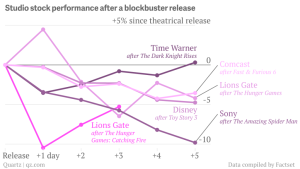
I stepped a little bit out of my comfort zone for my latest Quartz story, on why a movie studio’s stock often falls after its film has a blockbuster opening weekend. As I wrote,

The post-blockbuster stock dip has become a surprisingly common occurrence in recent years. Here’s why: just as Hunger Games fans spent months eagerly awaiting the film’s opening weekend, investors were likewise buying up LGF shares, causing the stock to double in the past year. This mirrors activity around an eagerly-anticipated new tech products, like iPhone and iPad releases, as investors buy in anticipation of a big event, then try to unload their shares to those suddenly interested in buying in after the gargantuan sales figures come out.

The more you know!

Why blockbuster opening weekends cause falling stock prices

Americans’ New Thanksgiving Tradition: Watching TV All Day Long

qz-americans-new-thanksgiving

Sure, you’re spent an hour or two eating Thanksgiving dinner on Thursday, but you’ll spend a lot more time honoring another important Thanksgiving tradition: watching TV all day long. As I wrote at Quartz,

More than any other major American holiday, Thanksgiving has become a TV-centric day, where people seem to spend far more time in front of the television than they do at the dinner table. And the broadcast networks are taking advantage of that rapt audience through marquee programs that last year attracted more than 114 million viewers.

From Macy’s Thankgiving Day Parade to three football games, let’s face it: you’ll be spending most of Thanksgiving in front of the TV.

Americans’ new Thanksgiving tradition: watching TV all day long

NBC Just Bought a Network to Cash in on Toddlers and Tablets

qz-nbc-just-bought

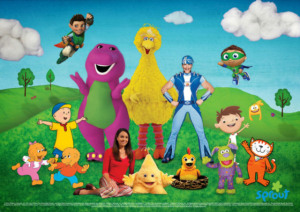
In my latest piece for Quartz, I looked at NBCUniversal Cable Entertainment’s acquisition of preschool network Sprout, and focused on one key area that the company will be looking to improve: Sprout’s paltry streaming app.

While Sprout reaches 60 million homes and boasts 1.5 billion on-demand views since its 2005 launch, its app numbers are less impressive. Sprout’s app, launched in March 2012, has been downloaded 1.5 million times. Meanwhile, the Watch Disney Junior app, which Disney debuted in June 2012, has already been downloaded 5 million times, generating more than 650 million video views. Nickelodeon, which introduced a new app for its flagship network in February,plans to roll out a Nick Jr. app for preschoolers next spring.

However NBCUniversal decides to overhaul Sprout’s app, it had better do it quick: many kids, mine including, have abandoned it completely.

NBC just bought a network to cash in on toddlers and tablets

Why Amazon, bucking the Netflix strategy, won’t release its original series all at once

qz-why-amazon-bucking

As Amazon tries to play catch-up with Netflix by streaming its first original series, it’s diverting from Netflix’s playbook in one major way: instead of releasing Alpha House’s entire first season at once a la House of Cards, Amazon will make the first three episodes available at once, and then debut one new episode each week. As I wrote at Quartz,

Amazon Studios Director Roy Price said it opted for a weekly release schedule “so that customers can chat about the shows and build up anticipation,” adding that the Netflix release model kills the conversation and buildup that surrounds a traditional release of a TV show. Since Netflix refuses to release any ratings data on its programming, there is no way to tell how many people have actually viewed its original series, or how many debut episodes were viewed as compared those later in the season.

If Amazon can keep viewers enthusiastic about its new shows for weeks and months on end, it might be able to beat Netflix at its own game.

Why Amazon, bucking the Netflix strategy, won’t release its original series all at once

Netflix’s Next Big Battle: In-Season Binge-Watching

qz-netflix-next-big-battle

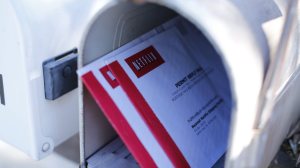
Netflix helped cultivate our binge-watching obsession, and as I wrote at Quartz, it’s now fighting with networks and cable/satellite providers over in-season binge-viewing, also known as stacking:

When it comes to binge-watching a show’s current season, options are very limited. The studio’s deals with Netflix/Amazon Prime/Hulu Plus usually cap the number of current episodes a network can offer via video on demand (VOD) at five. So if viewers want to binge, unless they purchase individual episodes via iTunes or Amazon on Demand, they must wait until the summer when the whole season becomes available via a streaming provider, which denies networks (and their advertisers) the opportunity to capitalize on these eager new potential viewers.

Networks are increasingly pushing to offer all episodes of a current season, what’s known as “in-season stacking rights,”on demand via VOD, online and the network’s mobile applications. “That’s where the big fight is happening now,” said Marc Graboff, president of Core Media Group, American Idol’s parent company, said at Variety’s Entertainment & Technology Summit on Oct. 21.

In short, it’s moronic that audiences don’t have the option to watch all episodes of a show’s current season, but until the networks, studios, advertisers and Netflix learn how to play nice, nothing is going to change.

Netflix’s next big battle: in-season binge-watching
TV Shows on the Brink of Cancellation are Being Saved by Delayed Viewing

qz-tv-shows-on-the-brink

One of the reasons I love writing for Quartz is being able to do stories like today’s: an explanation why the broadcast networks are being more patient than ever with new shows, as they rely more heavily on Nielsen’s “live plus seven” ratings. As I wrote,

Delayed-viewing is “significantly higher” than last year, CBS research chief David Poltrack told USA Today, adding that even older viewers, historically late adopters of new technology, are jumping on board. “The world has definitely changed,” says Poltrack.

I’m happy that delayed-viewing ratings have boosted the fortunes of several of my favorite low-rated series, like Brooklyn Nine-Nine, The Bridge and The Americans.

TV shows on the brink of cancellation are being saved by delayed viewing

‘The Walking Dead’ Wakes Up and Fights Piracy by Releasing Global Versions Earlier

qz-walking-dead-wakes-up

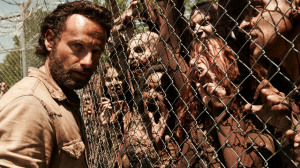
It’s almost time for The Walking Dead’s Season 4 premiere, and unlike in previous seasons, international viewers in more than 125 different countries will be able to watch within 24 hours of the U.S. debut. As I wrote at Quartz,

Previously, the show’s international air dates lagged behind The Walking Dead’s US showings by a week. But FIC was no longer willing to sit by and watch as the show’s rabid fans pirated the latest episodes. “We want to prevent the spoilers for sure, we also want to make sure [international viewers] get the best version of the show—not some pirated version,” Fox International Channels’ chief marketing officer Liz Dolan told The Wrap. “But we also want them to get it super fast.”

Now, no country is safe!

‘The Walking Dead’ wakes up and fights piracy by releasing global versions earlier